


Conflict, Peace, and Development

सारांश
- Peace includes the study of causes of armed violence and war, courses of conflict, and preconditions for peaceful resolution and peace-building.
- To establish peace, everyone must think about the conflict management.
- The conflict may be either internal or external.
Peace includes the study of causes of armed violence and war, courses of conflict, and preconditions for peaceful resolution and peace-building. To establish peace, everyone must think about the conflict management. The conflict may be either internal or external. The conflict may be about casteism, gender, regional etc.(The University of Gothenburg,).Whatever the conflict, it must eliminate and solve.
Conflict may be defined as a struggle or contest between people with opposing perception, needs, ideas, beliefs, values, or goals. Conflict on teams is inevitable; however, the results of conflict are not predetermined. The conflict might increase and lead to fruitless consequences. It is a serious disagreement or argument or often extended argumentative. It might occur within and betweenindividual, groups, organizations, nation and international. Conflict is a serious disagreement or argument or often prolonged fighting. It is a state of disharmony or controversy between persons, ideas, or interests; a clash, a struggle or clash between opposing forces.
A conflict situation is unwanted. It splinters society and interrupts peace and harmony in the nation. The longer it continues the more harm it does to the people and the country. Asparkis not put off timely turn a flame that consequences into a disaster. Likely in conflict- minor conflict is not addressed early enough that may causeserious national issues. It can destroy life, property, relationship and so on.
Despite major improvements for peace in the past few decades, theviolent conflict remains a factor incountries. Over 1.5 billion people live in fragile and conflict-affected countries, and the current situation of people in countries as diverse as Syria, Yemen, Libya, Myanmar, Afghanistan, Philippines, Mali, India, Colombia, Pakistan, the Democratic Republic of Congo, Iraq, Ukraine, Nigeria, South Sudan, Somalia, and the Central African Republic – and in fragile parts of more stable countries where gang- and crime-related violence prevails – is a salient reminder of the need to focus national and international efforts on peacebuilding(International Alert, 2015). Nepal has witnessed various types of conflicts over the period.
For example, there was a conflict for a decade (2052 to 2063 BS) in Nepal. It officially ended when the Comprehensive Peace Accord-2063 BS was signed between Maoist and government presence as awitness of all political parties. Due to this conflict, the country greatly suffered in its development as well as many important infrastructures were damaged. Some of the conflicts are structurally rooted while others are merely for power relations. In term of power relation, discrimination may cause the sources of conflict. Existing formal conflict resolution mechanisms may need to be revised to provide equitable access and just services to the entire population of Nepal for the sustainable development.
In terms of natural resources conflict management, the process needs to be more participatory, transparent and inclusive to avoid by the elite capture that privilege certain economic groups and ideologies. Eliminating systemic, institutional and judicial corruption and practices of abuse of authority are required for a transformative change in conflict mechanism practices in Nepal(Pandey, 2016).
Development and conflict are intimately linked. Competition over access to resources lies behind, indeed is often at the heart of most wars and other forms of organized violence. Peacebuilding is everyone business. Sustainable peace within and between societies is only possible when people have fair access to sustainable livelihood and asset accumulation opportunities, combined with general well-being, justice, security in a context of good governance. Analysing the past trend of conflict and peace process in Nepal, there can be several causes of conflict.
The main causes can be expressedas opposing ideologies; conflict of interests; insensitive & irresponsible government; lack of political rights, awareness, & social justice; unhealthy competition within political parties; inequality, exploitation & discriminations; unequal distribution of national income, means & resources; mass poverty and backwardness; lack of understanding, cooperation & tolerance Sense of revenge; and level of understanding and variance of discrete income level.
As soon earliest; all the stakeholders including of political parties of Nepal has to be realized and visualized of past conflict, post peacebuilding and considered aforthcoming conflict. The sustainable peace process has to be themotto for everyone so all the concern involves, realize the seriousness of thesituation and reach alogical ending. Mutual understanding, trust, cooperation, and compromises are needed in conflict management and peacebuilding.
The building of trust and confidence among opposing parties is important in conflict management and sustainable peacebuilding process. Justice and equitable distribution of national income, means & resources; innovative & good governance; political stability; economic development & social justice; thePeaceful & amicable solution to disputes; respect to rules & laws can be the milestone for the sustainable peacebuilding and thereby development.
Peace, security, stability and good governance are pre-requisites for sustainable development.A politically unstable environment usually means that the government is misusing or mismanaging the country’s resources: resources are not being used to their full capacity, or in a manner whereby economic development could be maximized. Politics is very important to care about politics because to know what is going on around thenation. The political decisions will affect many lives.
Most of the countries have ademocratic system where Politics elected the government and the laws being made. So the political system is a root cause for theeconomic development of the nation. As such, the profession has produced an ample literature documenting the negative effects of political instability on a wide range of macroeconomic variables including, among others, GDP growth, private investment, taxation, public expenditures and investment, debt and inflation.Political stability is a major and fundamental weight of sustainable development, where sustainability involves a relationship between ecological, economic and social factors including peace.
A country cannot prosper without peace. A country should align with other countries to maintain good relationships and to avoid foreign interference. “In today’s world filled with irregularities and inequality, there is no alternative except the principle of peaceful coexistence”. This was said by thelate king, Birendra Bir Bikram Shah and it is a great topic of concern for a country like Nepal to follow the path of peace. In today’s world, there are many demands of people like the supply of petrol, gas, electricity, drinking water etc and to fulfill it, the country might not have enough resources to fulfill those demands, In this situation, the country needs to ask for help from other countries. Only the country having peaceful relation will give another country help. Thus a country needs to develop peace with other countries.Inside the country also, there might be political disturbances or strikes which may destroy the country’s resources and manpower. So, inside or outside also, the country we need to develop peace for development.
Peace is defined as a state of self-control or an exit of a disorderly situation. Peace is the mark of the confused situation. At the same time, peace is not merely the exit of war but also the existence of humor and happiness or else it is termed as dead silence, which is as far dangerous as violence. Peace is needed not only in a single nation but also all over the world. Peace is world’s first priority.
Peace is needed for all, a person’s need, a family’s need, a school’s need, a child need, society and nation. Peace is the thing that can be felt, realized and further demanded. The demand is for the sake of any kind of progress. Any kinds of violence are not liked by peace wishers because a man can’t have peace of mind and so he/she can’t make any decisions for progress. Provisions are possible only in a peaceful environment.
Peace and development are then in a fundamental sense related to processes of globalization and global social development. To grow more powerful, aggressive and prosperous, people started to utilize the nature or so-called natural resources. The utilization of the natural resources made the country in every sector. This change or progress is called development(Trí, 1997). It is important to all species, especially to humans but development was not easily made.
Development deepens on technology including machine, financial resources, natural resources, human resources, infrastructures and most importantly social capital resources, people engagement and peaceful environment of the nation. This change or progress is called development. It is important to all species, especially to humans but development was not easily made. We needed technology, financial, physical & natural, human including of social capital resources. All these factors have proven to be a key factor for thedevelopment of a country. These factors helped a country to develop economically but peace is one of the important factors.
Peacekeeping is one among a range of activities undertaken by the United Nations to maintain international peace and security throughout the world. United Nations secretary general Ban Ki-moon has expressed UN’s readiness to provide any kind of help upon the request of the Nepali people. All parties together under UN supervision, have successfully happened the elections of Constituent Assembly, and also logically ended the monarchy system and got new constituent as well.All we know well that the peace process was moved in aright direction. https://drlauryn.com
Nepal is at a crossroads after the momentous events of 2006 and the Comprehensive Peace Agreement. After decades of conflict, a chance for real peace, real social inclusion,and real democracy was possible because peace is required for the nation’s integration. The peace process in Nepal was prospered due to together all the political parties into a common agenda of peace.As a result new constituent, federal republic state and thereafter central, provincial and local election happened. And hope the new government will form and govern the state as directed by a new constituent of thefederal republic of Nepal. In this modern era, peace has become a global quest. Not a single country in the world is a peaceful and secured country now. There prevail some or other ways and forms of violent activities, which threaten human rights and development. Infact, development and peace are synonymous with each other.
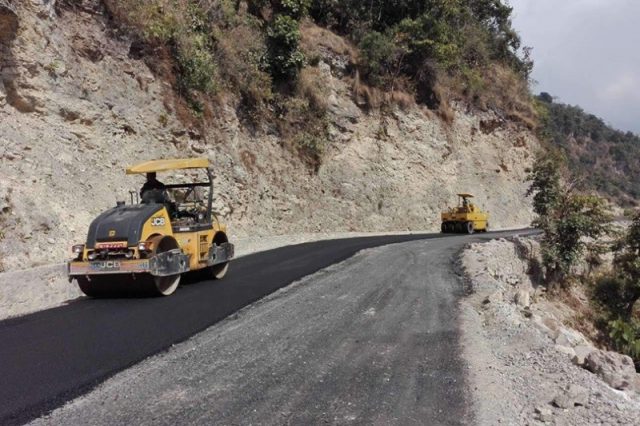
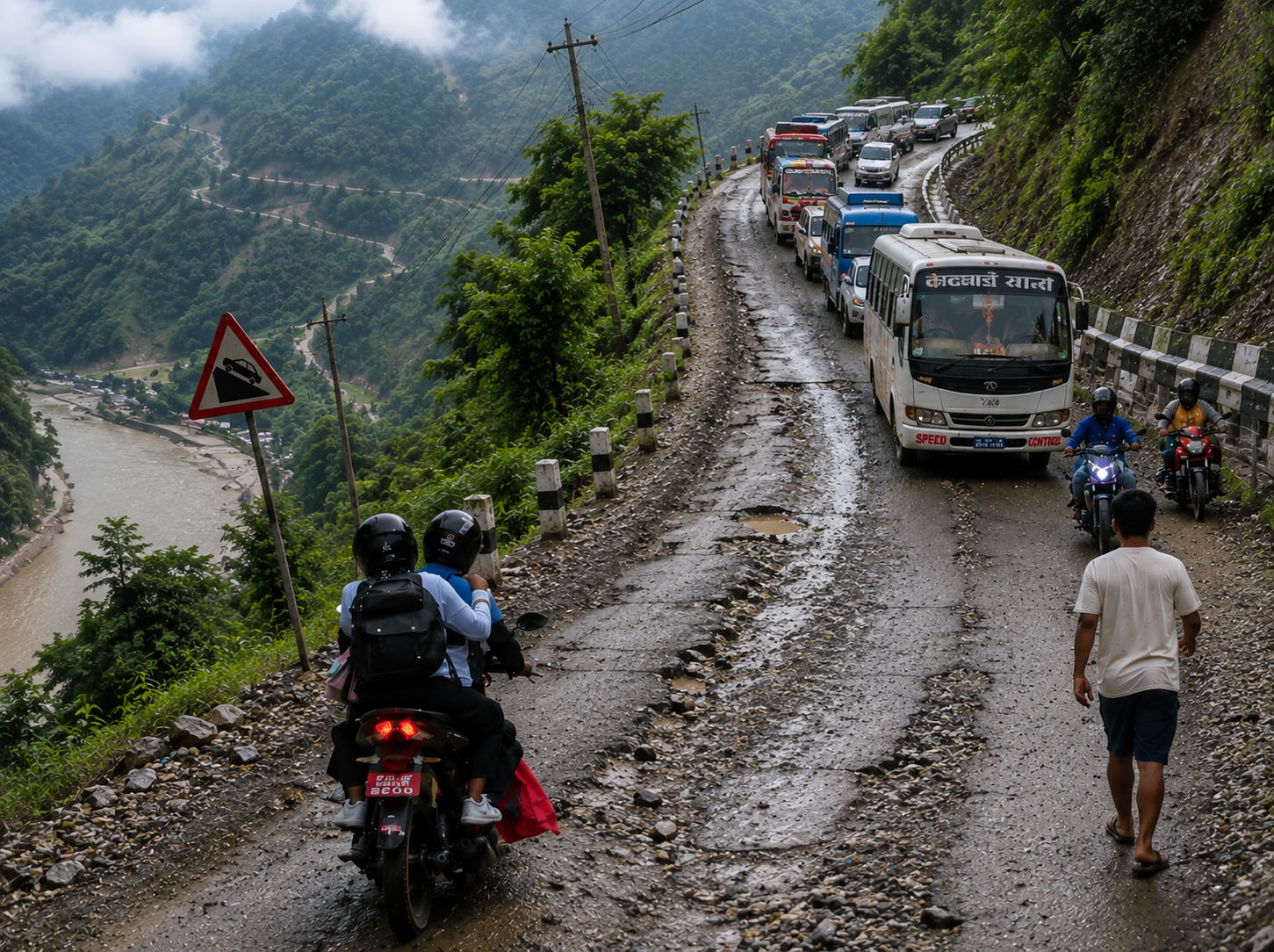
They can not prosper in isolation. Development without peace and peace without development are worthless. Development projects do accelerate and flourish only through peace and harmony; and law and order situation in the country. Likewise, development is, on the other hand, a long-term continuous process, which demands the direct involvement of people with other factors. The physical infrastructures like-transportation, communication, electricity etc. lend people charismatic comfort and luxury in life, but can’t guarantee the smile, fortune, and prosperous life unless and until they feel secured or out of danger. If they do have the feeling of peace and security, then they will definitely develop a new zeal and enthusiasm to join hands in hands to trail “their royal! the path to truly prosperous and dignified lives. So, we can see the peaceful countries developing miraculously within the very short time span.
While on the other hand, countries involved in the civil war where peace and harmony are destroyed, have witnessed the collapse of the foundation of sustainable development like-Afghanistan, Iraq, Sri Lanka, Somalia, Liberia, Rwanda and so on. Similarly, our country Nepal is not an exception in this matter. The escalating violence has left approximately twelve thousand dead in the last decade. The incessant decade-long conflict has ruined the entire economy and all development activities have come to a standstill. But now, the scenario has massively changed.
After the government and the rebels signed the pact (comprehensive peace accord), they formed the seven-party interim governmentto the central, provincial and local election as suggested by the recent constituent of Nepal. So, the country is no longer in severe war. Moreover, the constituent assembly (CA) election has been peacefully held. It has given the verdict in favor of CPN (Maoist). The country has entered a new era of the RepublicanFederal. Let us hope Nepal will be theonce again-‘a land of peace, progress and prosper’.Taking such phenomenon sustainable development via peace.
Governments, international agencies, businesses and economic development I/NGOs in fragile and conflict-affected countries should integrate contributing to peace into their formal mandates, their economic policies, programmes, and projects.This means identifying and seizing opportunities to pull the ‘levers of change’ (communication, sponsorship roadmap, and assistance, coaching, training,and resistance plan)(Allison Seabeck, 2017). Some of these are readily available, and any economic development work being planned or done on any of such levers of change is potentially an opportunity for peacebuilding(Kirbassov, 1994).
Similarly, practitioners, policy think tanks should have engaged in more public discussion, also including academics in fragile and conflict-affected countries about the links between economy and peace, define what they look like in practice in different contexts, and tease out the opportunities, paradoxes, tensions, and overlaps(International Alert, 2015).International and local peacebuilding experts should do more to make their expertise available to economic development promoters, and the latter should do more to engage with and learn from them in a spirit of joint business and collaboration. Finally, peacebuilding and sustainable development are two parts of a coin and these issues are everyone business, so everyone come together where the government should provide a favorable environment to achieve peace and development.
References
Allison Seabeck. (2017, December). https://www.prosci.com/change-management/thought-leadership-library/five-levers-of-organizational-change-management. Retrieved from https://www.prosci.com: prosci.com
International Alert. (2015). PEACE THROUGH PROSPERITY. Retrieved January 1, 2018, from http://www.international alert.org.
Kirbassov, G. (1994). Peace and Sustainable Development: A Two-Way Relationship; Position Paper and Policy Recommendation. UN EcoSocGeneral Consultative Status & Peace Islands Institute. London: Journalists and Writers Foundation.
Pandey, C. L. (2016). Resource Conflicts and Conflict Management: Practices and Challenges in Nepal. Journal of Conflict, Peace,and Development Studies (JOCPDS), 2(1), 35.
The University of Gothenburg, (n.d.). https://globalstudies.gu.se/english/research/disciplines-subjects/peace-and-development, TPeace and Development”. Retrieved January 2, 2018, from https://globalstudies.gu.se.
Trí, H. C. (1997). DEVELOPMENT, PEACE, AND SOLIDARITY SEEN IN A WIDE SOCIO-CULTURAL VIEW.London: UNITED NATIONS EDUCATIONAL, SCIENTIFIC AND CULTURAL ORGANIZATION.
Prakash Prasad Pokharel
Project Manager, READ Nepal
pokharel.prakash@gmail.com









प्रतिक्रिया